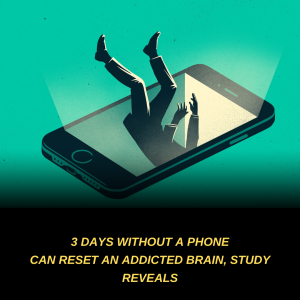
Just 3 Days Without a Phone Can Reset an Addicted Brain, Study Reveals
In a world dominated by screens, notifications, and endless scrolling, many people are unknowingly trapped in smartphone addiction.
A recent study suggests something surprising: stepping away from your phone for just three days may be enough to significantly reset an addicted brain.

The Rise of Smartphone Addiction
Smartphones are designed to capture attention.
Endless notifications, social media feeds, and instant gratification trigger dopamine — the brain’s “reward chemical.” Over time, this can rewire neural pathways, creating addictive behavior similar to gambling or substance use.
What the Study Found
Researchers observed participants who voluntarily disconnected from their phones for three consecutive days.
The results showed:
-
Reduced dopamine cravings
-
Improved emotional regulation
-
Increased focus and mental clarity
-
Lower anxiety levels
Brain scans revealed measurable changes in regions associated with reward processing and impulse control.
Why Just 3 Days Makes a Difference

The human brain is remarkably adaptable.
After 72 hours without constant digital stimulation:
-
Dopamine levels begin to normalize
-
The brain stops expecting constant rewards
-
Stress responses decrease
This short break allows neural circuits to “reset.”
Symptoms During the First 48 Hours
Participants reported withdrawal-like symptoms:
However, these symptoms peaked early and declined rapidly by the third day.
Mental Benefits After the Detox
By day three, many participants experienced:
Several described the experience as “mentally freeing.”
What Happens to Dopamine Levels

Constant phone use overstimulates dopamine release.
During the detox:
-
Dopamine receptors regain sensitivity
-
Natural rewards (conversation, nature, reading) become enjoyable again
-
Cravings decrease
This explains why even a short break can feel transformative.
Not About Quitting Technology Forever
Researchers stress that the goal is not to eliminate phones entirely.
Instead, the study highlights the importance of:
-
Conscious usage
-
Digital boundaries
-
Regular detox periods
Technology should serve us — not control us.
How to Try a 3-Day Phone Detox Safely
Experts recommend:
-
Informing friends and family beforehand
-
Using emergency-only access if needed
-
Replacing phone time with offline activities
-
Journaling emotional changes
Preparation increases success.
A Wake-Up Call for Modern Society
This study raises serious questions about how technology affects mental health.
If just three days without a phone can reset brain function, what does constant exposure do long-term?
Conclusion
Smartphone addiction doesn’t require months of treatment to improve.
Sometimes, all it takes is three days of disconnection to reconnect with yourself.
Turning off your phone might be one of the healthiest decisions you make this week.